EdTech: Product Lifecycle Management
Designing and evaluating product decisions across discovery, experimentation, launch, and iteration using behavioral research
Overview
Lifecycle thinking applies a product management lens to every stage of a feature or product, from initial market discovery through launch, growth, and iteration. At Spotify scale, each feature competes for user attention, development resources, and strategic alignment.
Behavioral research informs prioritization, feature rollout, and iteration by grounding decisions in how users actually behave rather than how they are expected to behave.
Project Presentation
Slide 1 of 25
Product Lifecycle
Each stage of the lifecycle informed the next. Research shaped hypotheses, hypotheses drove experimentation, and measurement determined iteration strategy. The analysis treated product decisions as interconnected rather than sequential.
Stage 1
Discovery
Market sizing, content format comparison, and subject area analysis identified photography education as an underserved niche with high profitability and low saturation.
Stage 2
Research
Behavioral research surfaced emotional needs around everyday photography, leading to the insight that non-technical users seek confidence rather than technical skill.
Stage 3
Experimentation
Product hypotheses around AI coaching, partner mode, and visual prompts formed the feature set. Penetration pricing and freemium conversion tested monetization models.
Stage 4
Launch
Go to market strategy targeted the primary persona through DTC App Store distribution, TikTok and Instagram creator campaigns, and a viral #ShotByTheia challenge.
Stage 5
Measurement
KPI targets included 40% photo activation rate and 15% organic share rate. Underperformance triggers included demo mode, instant-use overlays, and UGC prompts.
Stage 6
Iteration
Growth stage analysis evaluated a second product (Nolej) through competitor benchmarking, compliance requirements, and platform integration strategy for institutional markets.
Research and Behavioral Insights
The research combined quantitative market analysis with qualitative behavioral insight. Market data identified opportunity areas, while user research revealed the emotional and contextual drivers behind adoption, retention, and willingness to pay.

Market Opportunity: $165B Growing at 14% CAGR
The global EdTech market analysis revealed a $165B market growing to $350B by 2030. Content format comparison identified lessons as the highest opportunity segment: 25% market share, 17.3% CAGR, moderate saturation, and high profitability.
Photography Education: Low Saturation, High Profitability
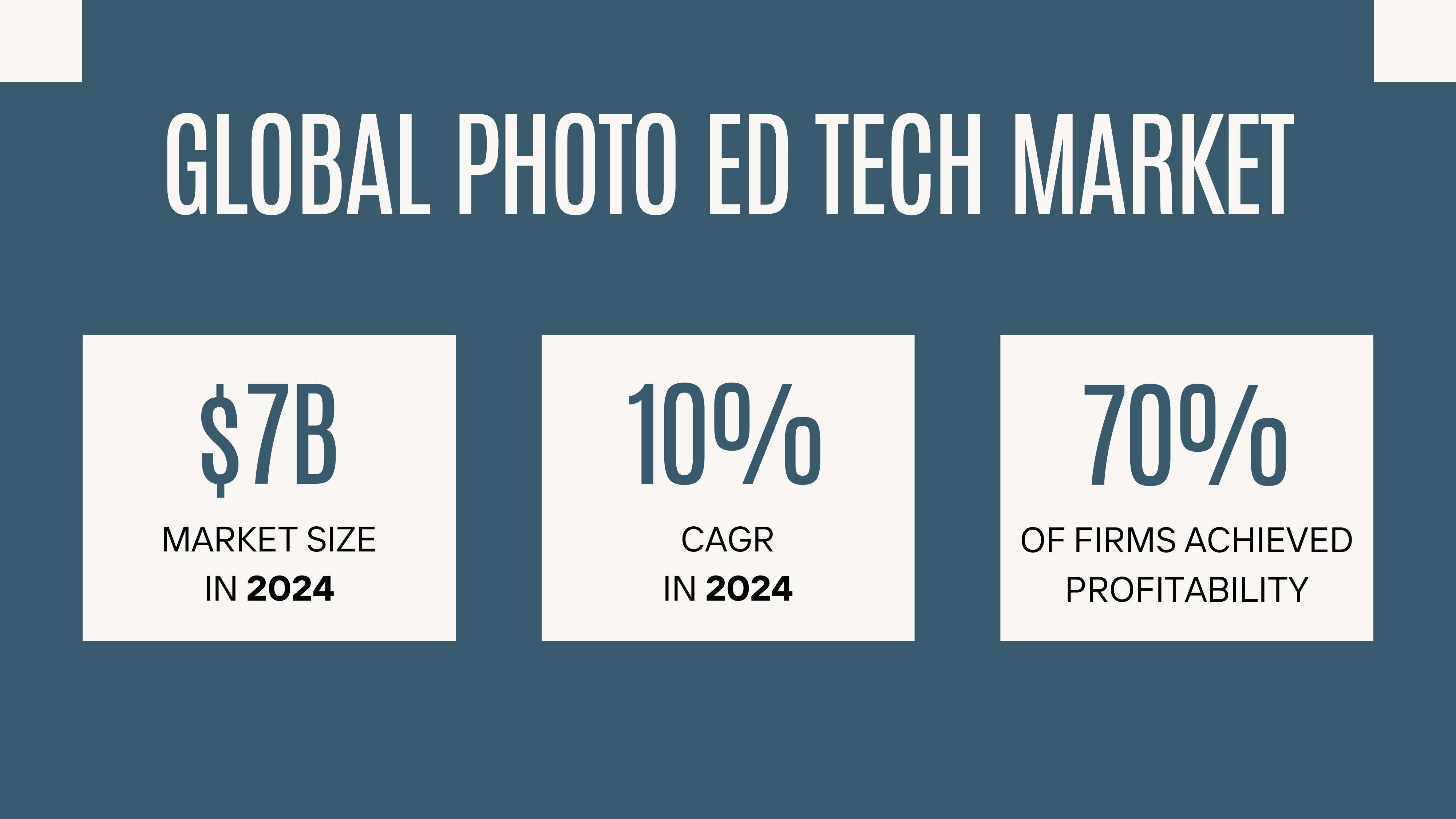
Subject market comparison across STEM, business, language, cooking, and photography identified photography as the strongest niche: only 4% market share with 9.4% CAGR, low saturation, and high profitability. The $7B photo EdTech market showed 70% of firms achieving profitability.
Emotional Need Over Technical Skill
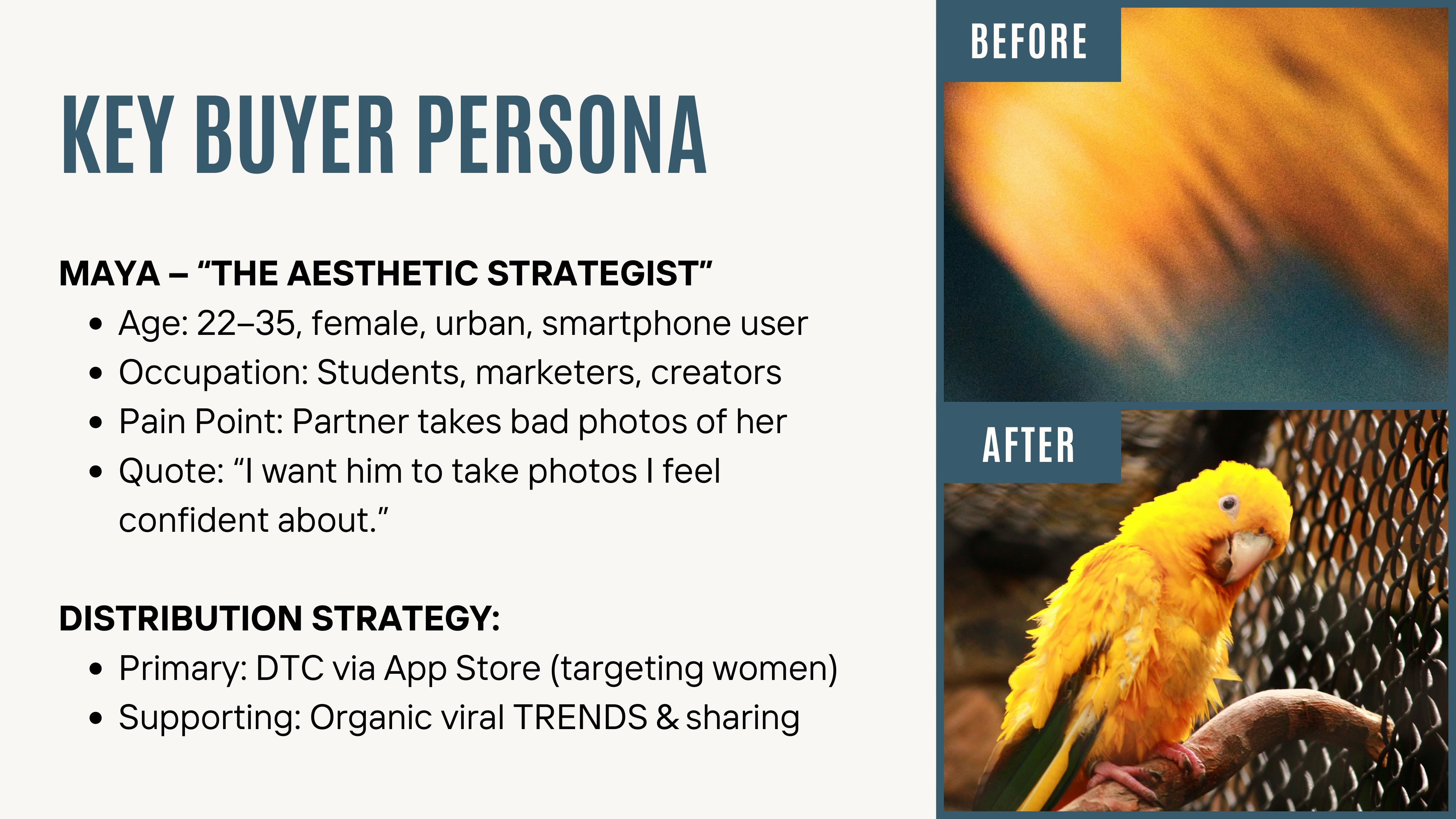
Behavioral research surfaced that the primary buyer persona seeks emotional confidence in photography rather than technical mastery. The core insight: users want to capture meaningful moments, not learn camera settings.
Competitive Landscape in Growth Stage
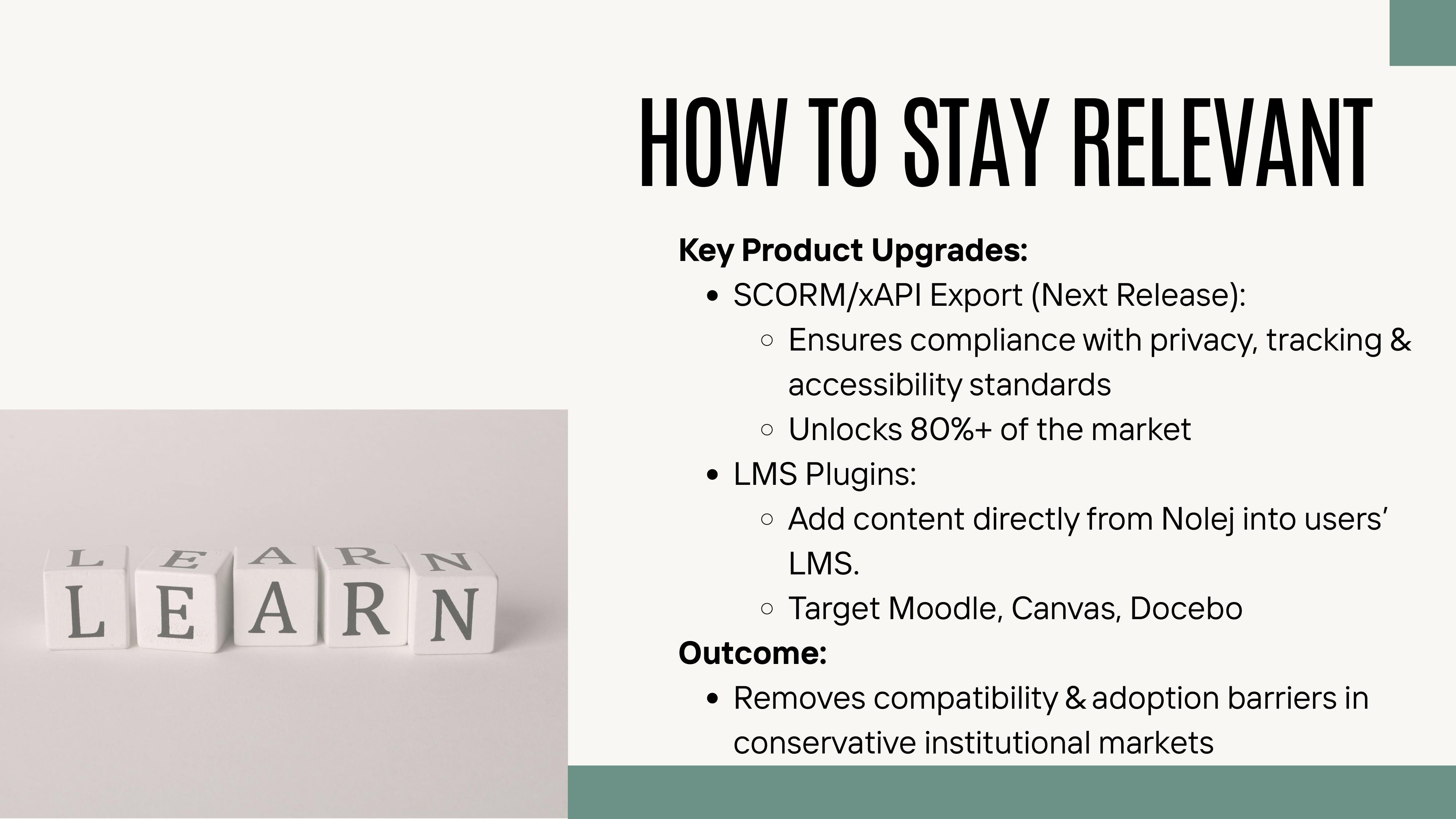
Growth stage analysis of Nolej (AI authoring tool) revealed competitive positioning against Articulate 360, Adobe Captivate, iSpring Suite, and Elucidat. Differentiation centered on faster creation, simpler UX, and flexible inputs without PowerPoint dependency.
Experimentation and Iteration
Hypothesis Formation
Product Concept: Theia
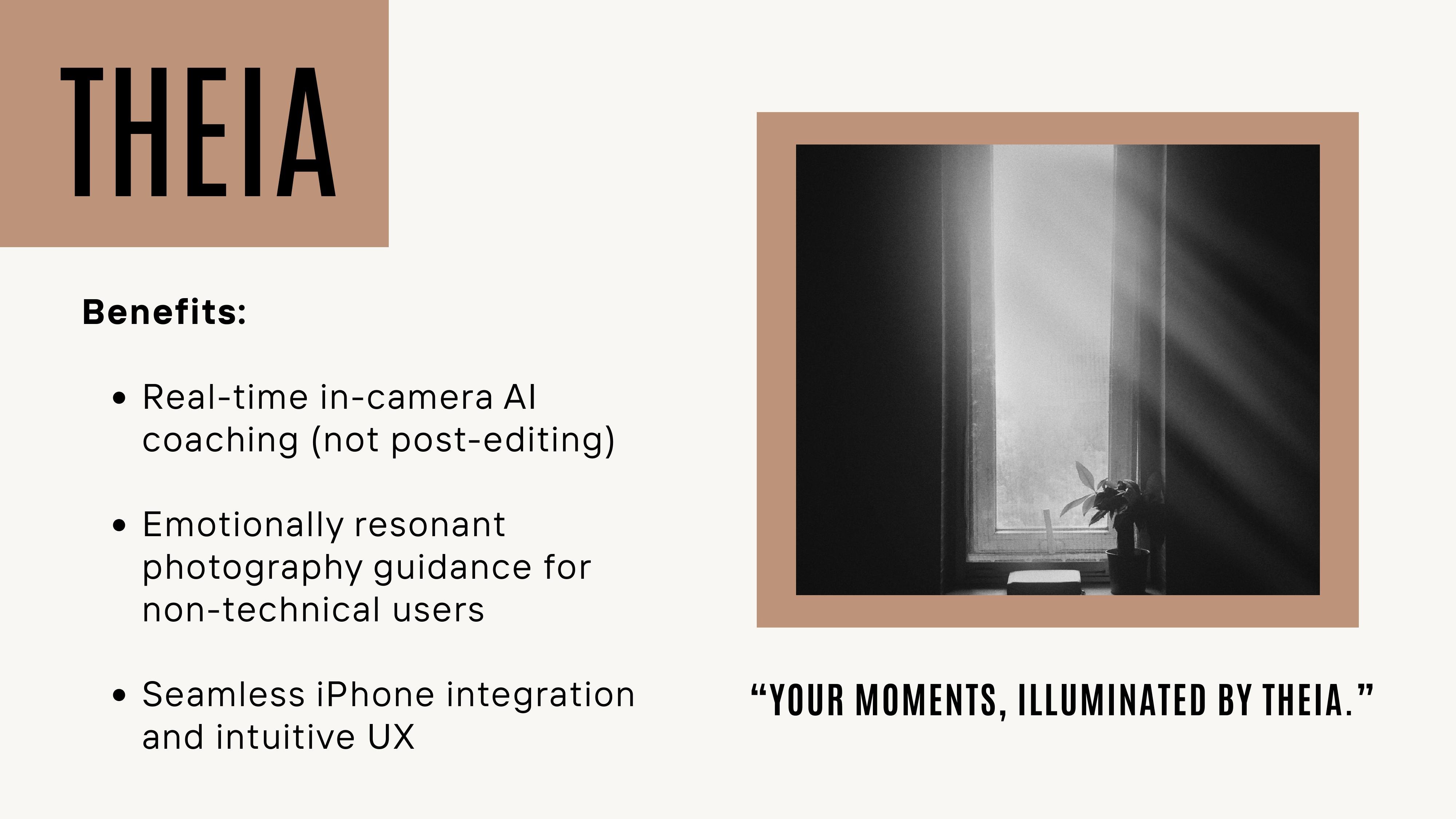
The product hypothesis proposed real time, in camera AI coaching for non-technical users. The concept prioritized emotionally resonant photography guidance over post editing tools, with seamless iPhone integration and intuitive UX. Partner mode, visual prompts, adaptive lessons, and voice styling formed the core feature set.
What Was Tested
Go to Market Strategy
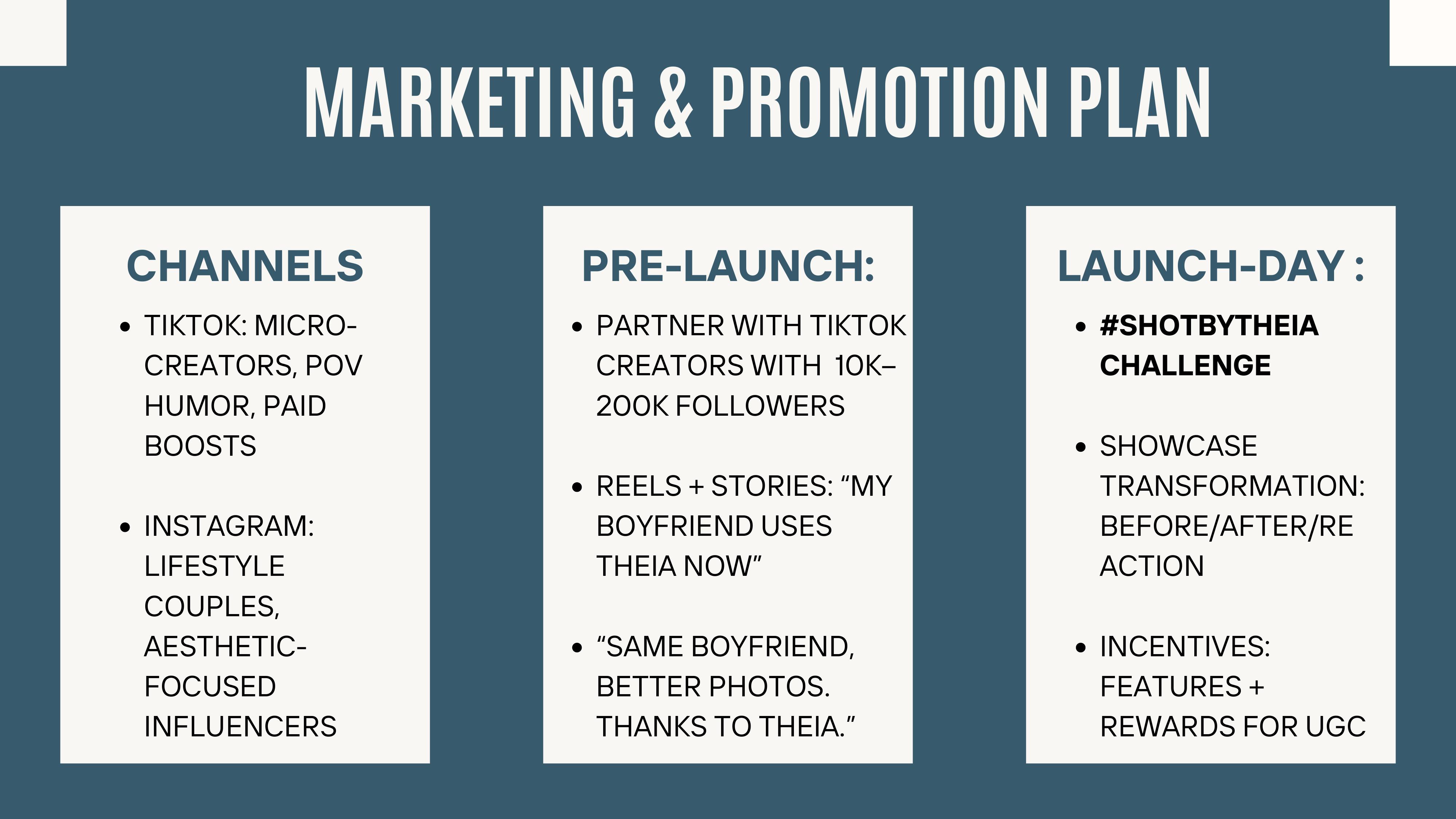
The marketing plan tested micro-creator partnerships on TikTok and Instagram, direct to consumer distribution via App Store, and a viral #ShotByTheia challenge. Penetration pricing at $4.99/month and a Founding User Gift incentive tested willingness to pay and early adoption dynamics.
Learnings and Next Phase
Iteration as Continuous Loop
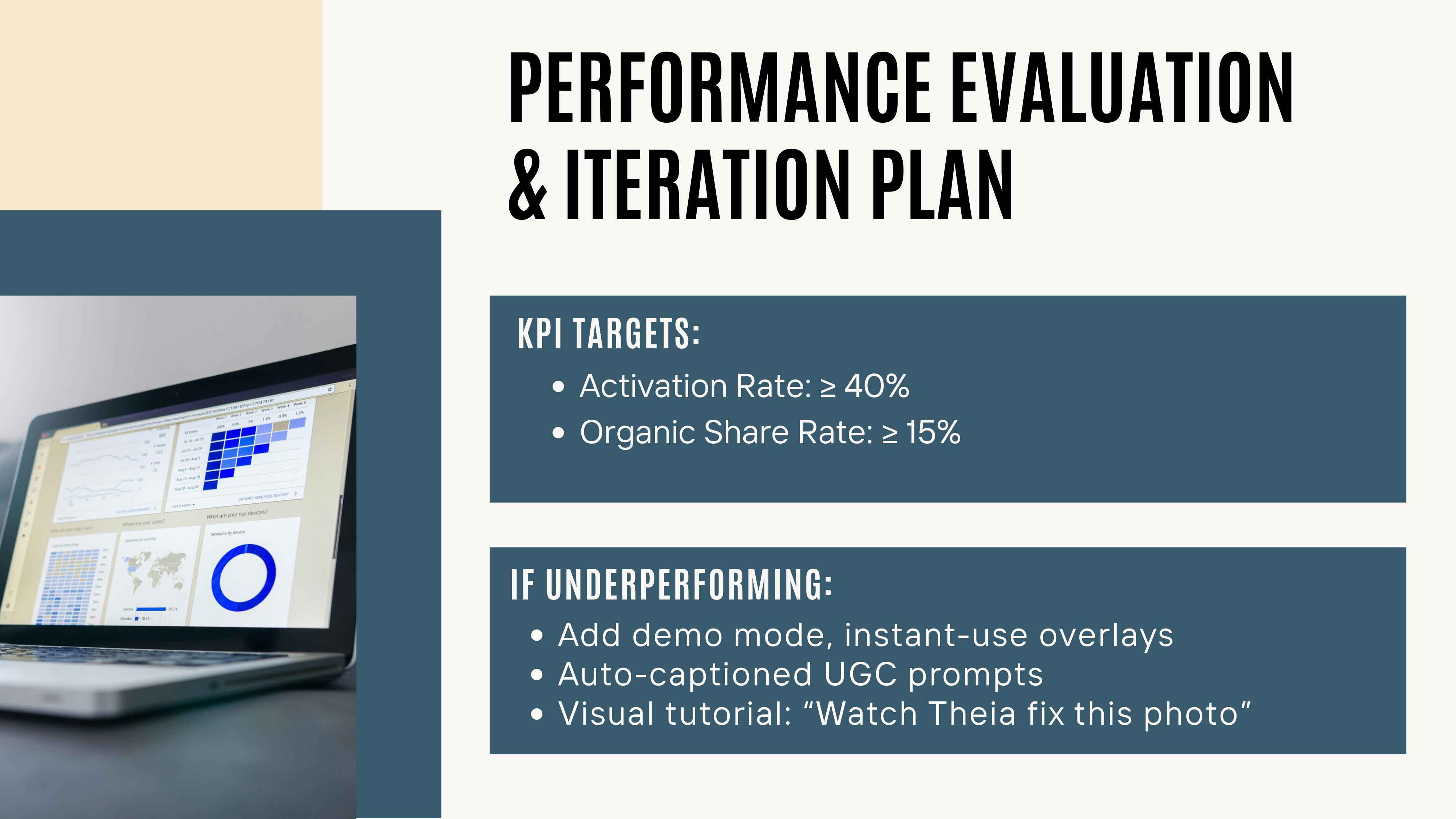
Performance evaluation defined clear KPI targets: 40% photo activation rate and 15% organic share rate. Underperformance triggers included demo mode, instant-use overlays, and auto captioned UGC prompts. The growth stage then applied the same lifecycle framework to a second product (Nolej), reinforcing iteration as a repeatable system rather than a final step.
Lifecycle Loop
Product Development
Market sizing, audience insight, product vision, feature set, and brand identity for Theia.
Introduction
Buyer persona, distribution strategy, marketing channels, pricing model, and performance KPIs.
Growth
Competitor analysis, product upgrades, compliance requirements, and platform integration for Nolej.
Impact and Learnings
Lifecycle Ownership
Product decisions carry consequences across every phase. The analysis reinforced that designing beyond launch requires ownership of measurement, iteration, and competitive positioning.
Designing Beyond Launch
Launch readiness accounts for only one phase of a product's life. Growth stage analysis of Nolej demonstrated that staying relevant requires continuous competitive intelligence and compliance adaptation.
Strategy Through Research
Product designers contribute through strategy, research, and systems thinking. Behavioral insight shaped feature prioritization, go to market strategy, and pricing models across both products.
Transferable Lifecycle Thinking
The lifecycle framework applied equally to a consumer photography app and an enterprise AI authoring tool. The methodology transfers across product types, markets, and organizational contexts.
Impact Summary
Lifecycle thinking transforms product design from feature delivery into strategic ownership. Grounding every phase in behavioral research and market intelligence produces decisions that hold up beyond launch and adapt to competitive realities as they evolve.