Porto Seguro: Safe Driver Prediction
Porto Seguro, a Brazilian insurer, asks which drivers will file a claim in the coming year. Of 595,212 policyholders in the training data, 21,694 did: 3.64 percent.
595,212
policyholders
3.64%
filed a claim
217
engineered features
0.288
normalized Gini
Problem
Understanding the challenge and user needs
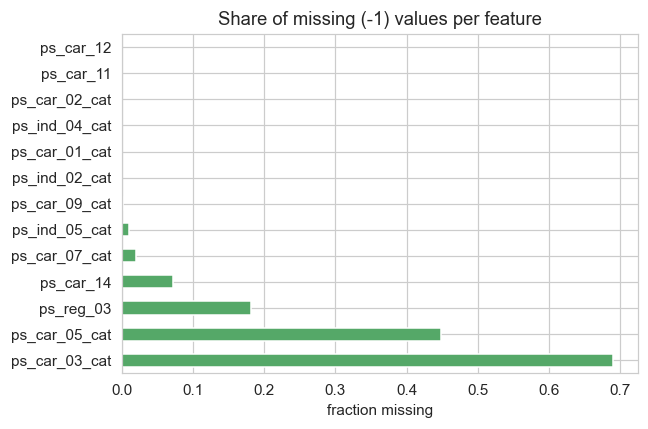
A model that predicts no claims at all scores above 96 percent accuracy and helps no one. The competition measures ranking quality with the normalized Gini coefficient, and missing values carry meaning of their own.
The imbalance
| Class | Policyholders | Share |
|---|---|---|
| Filed a claim | 21,694 | 3.64% |
| No claim | 573,518 | 96.36% |
The test set holds a further 892,816 policyholders.
Approach
Strategy and methods used to address the problem
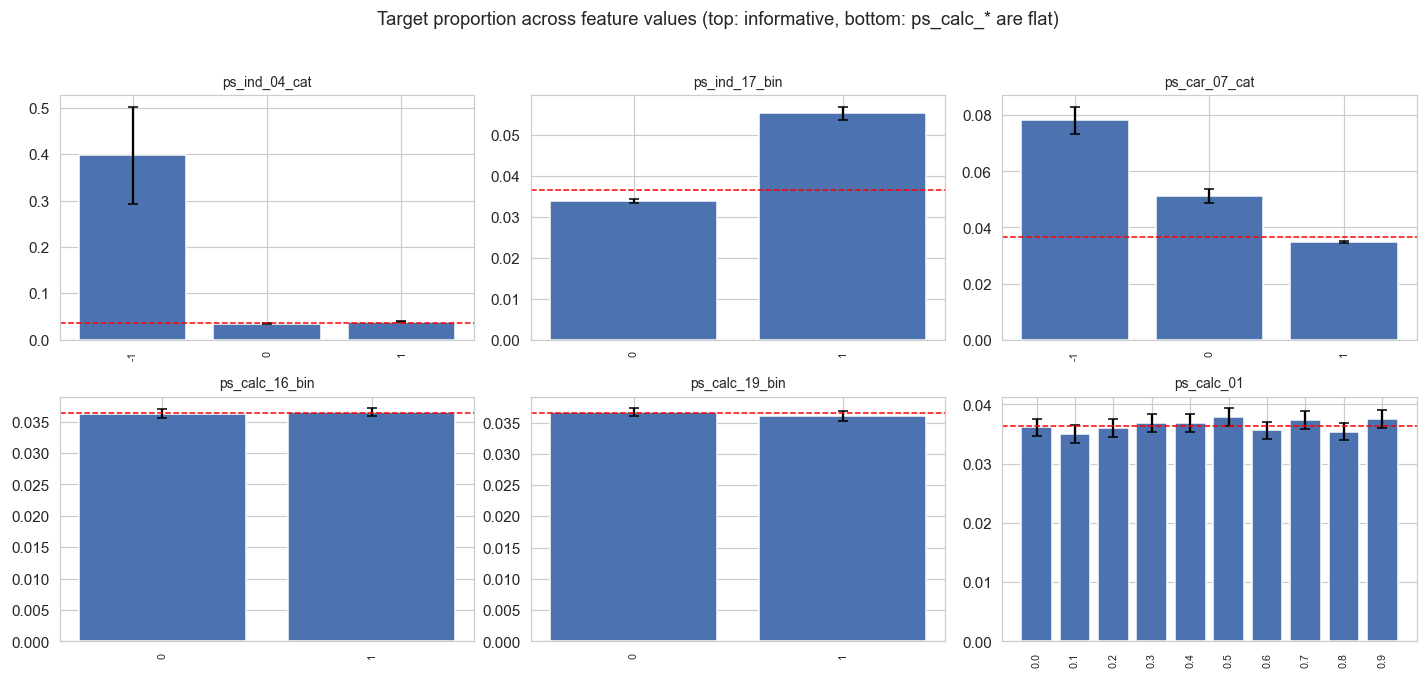
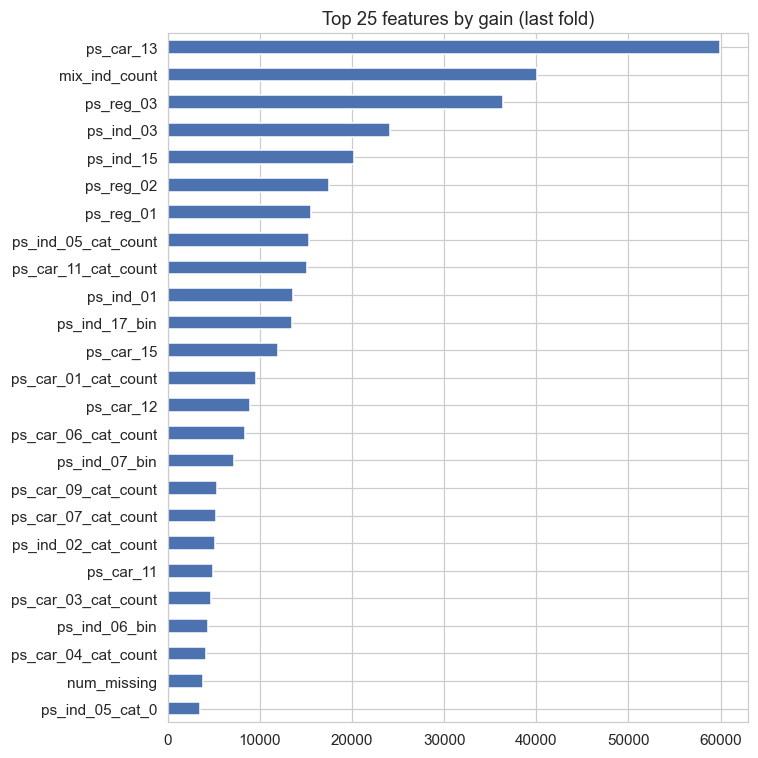
Exploration compared claim rates across each feature's values and flagged a group of calculated features that carried no signal. Feature engineering expanded the matrix to 217 columns, and Bayesian optimization tuned a LightGBM model under cross-validation.
(opens in a new tab)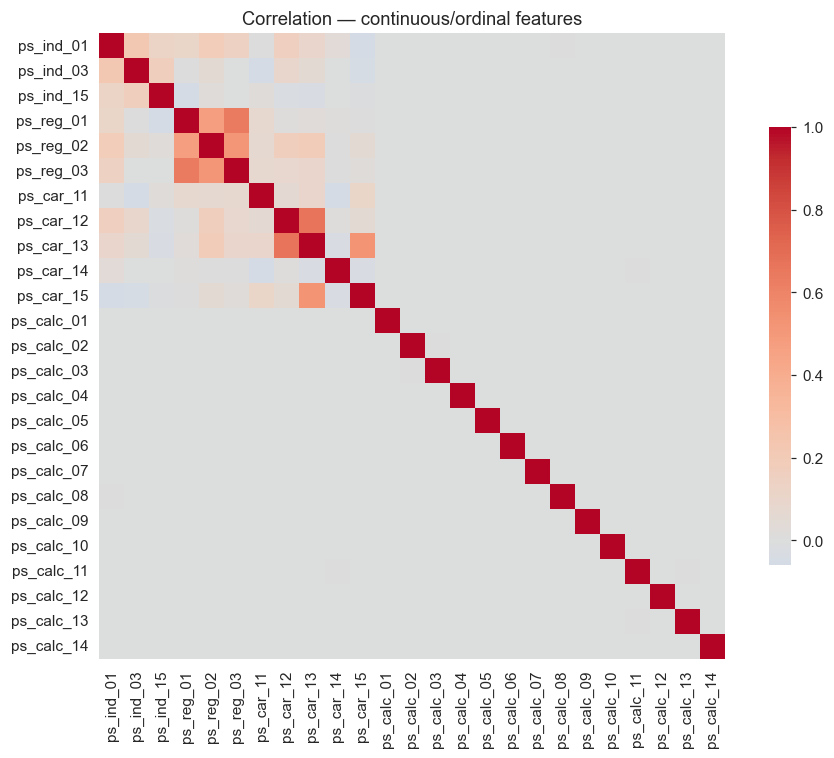
Final Solution
The final design and outcome
The final model reached an out-of-fold normalized Gini of 0.288 across all 595,212 policyholders.
Impact & Validation
Results, learnings, and outcomes
The analysis separates informative features from decorative ones before modeling, which keeps a model for a rare event from learning noise.