Sift: Search That Answers From Your Own Content
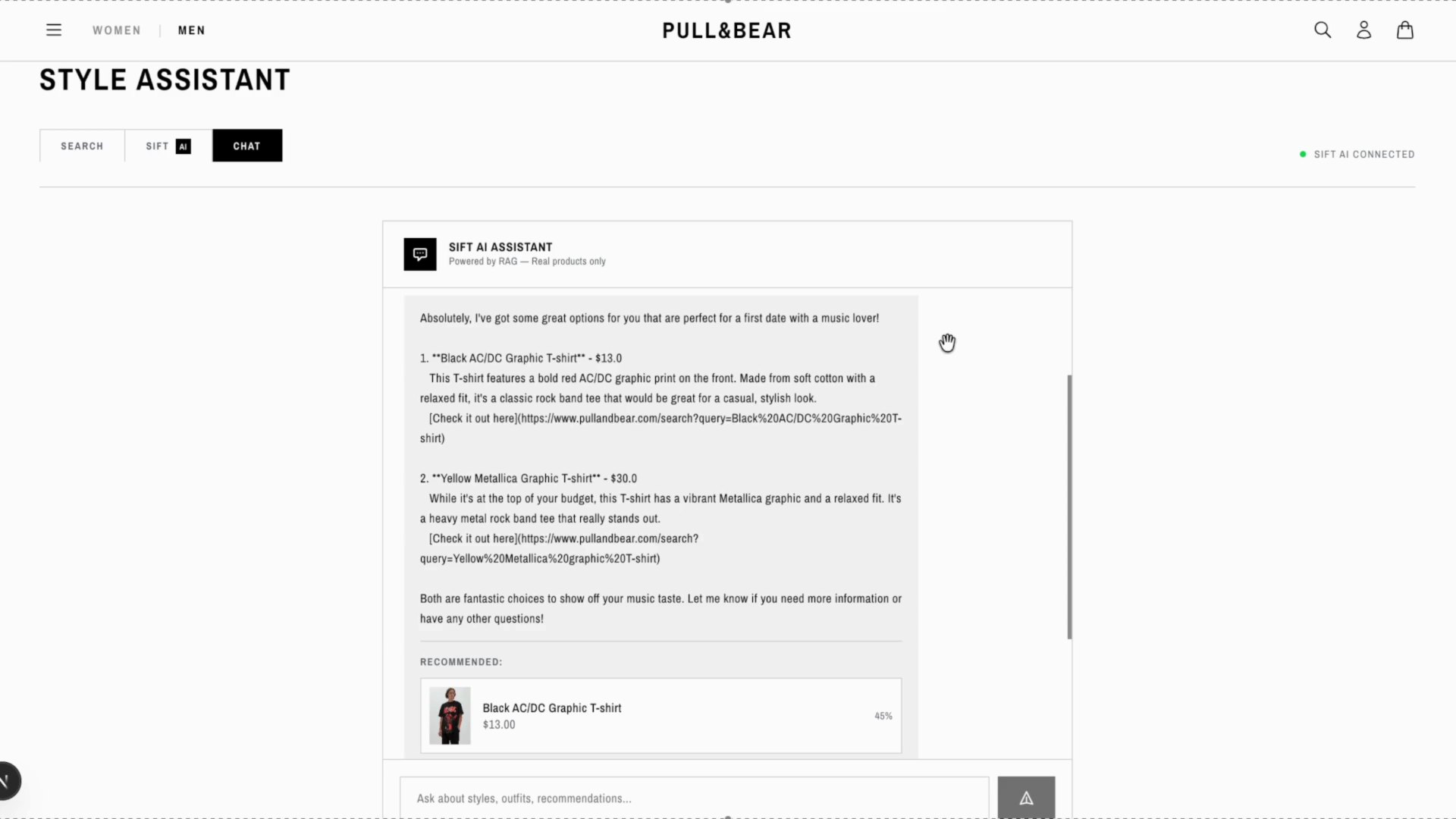
Sift answers questions from an organization's own content and shows where each answer came from. The first version won a buildathon; two products followed: Sift Drive, a knowledge base over internal policy documents, and Sift's retail search, a shopping assistant that recommends only what a store sells.
36
policy documents indexed
5
departments covered
1st
of 30 teams at the buildathon
Top 5
of 30 at the venture bootcamp
Problem
Understanding the challenge and user needs
Keyword search returns documents that contain the words, and a general chatbot returns answers that sound right. Neither tells an employee what the travel policy says, or tells a shopper which shirt in this store suits a first date, with the source to prove it.
Approach
Strategy and methods used to address the problem
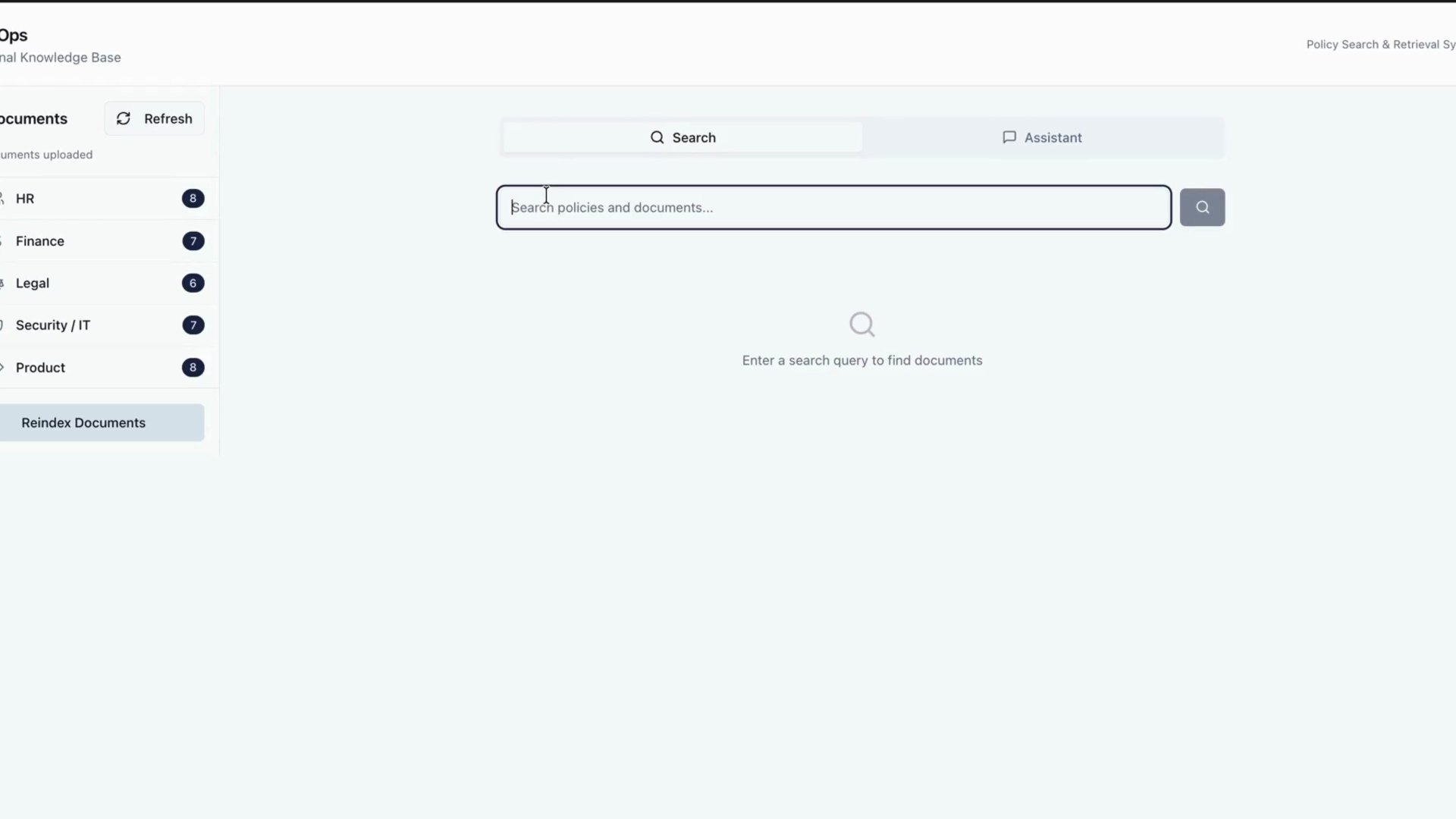
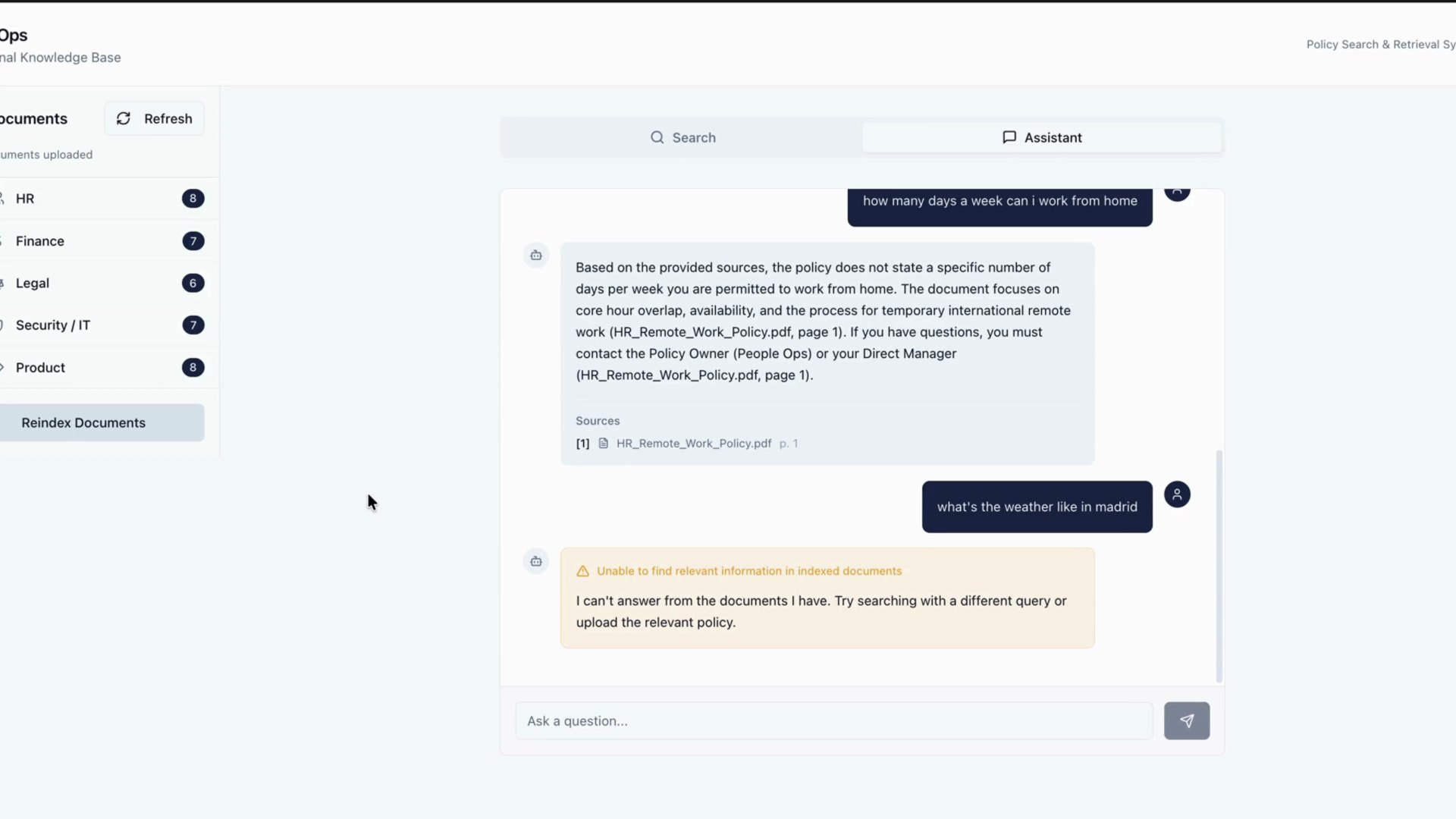
Sift Drive indexes 36 policy documents from five departments. Each document splits into passages, each passage becomes an embedding in a Qdrant vector database, and a question retrieves the closest passages before the language model writes an answer from them alone. Every answer lists its sources by file and page.
What Sift Drive indexes
| Department | Documents | Examples |
|---|---|---|
| Human resources | 8 | Remote work policy, employee handbook |
| Product and engineering | 8 | Architecture overview, deployment runbook |
| Finance | 7 | Expenses policy, travel policy |
| Security and IT | 7 | Password and MFA policy, incident response |
| Legal | 6 | Data retention, GDPR guide |
Final Solution
The final design and outcome
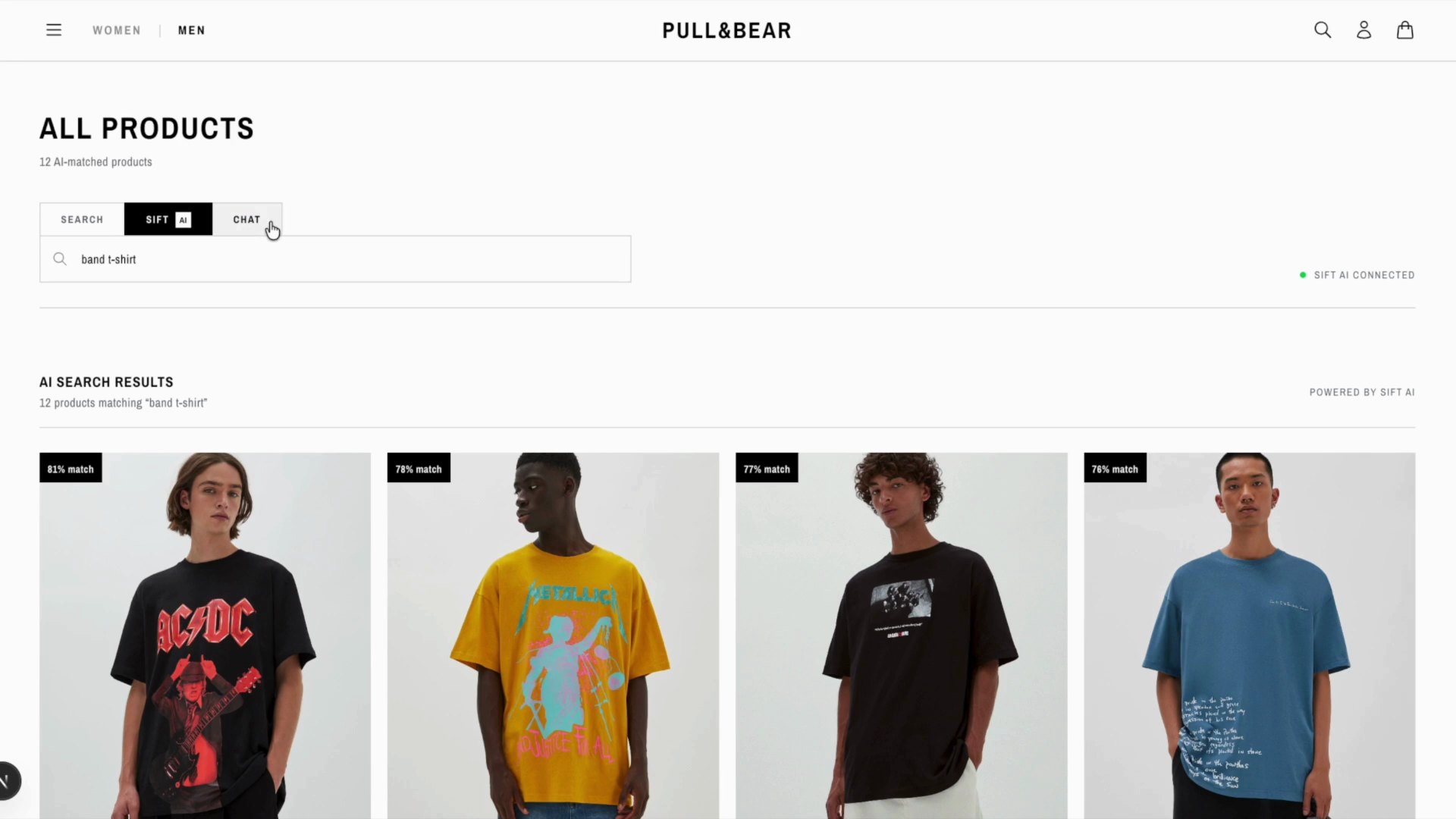
The retail product applies the same retrieval to a product catalog. A retailer uploads a catalog, each store's data stays isolated from every other store's, and two script tags add search and a chat assistant to an existing storefront. The assistant reads the shopper's request, retrieves matching products, and answers only from that set.
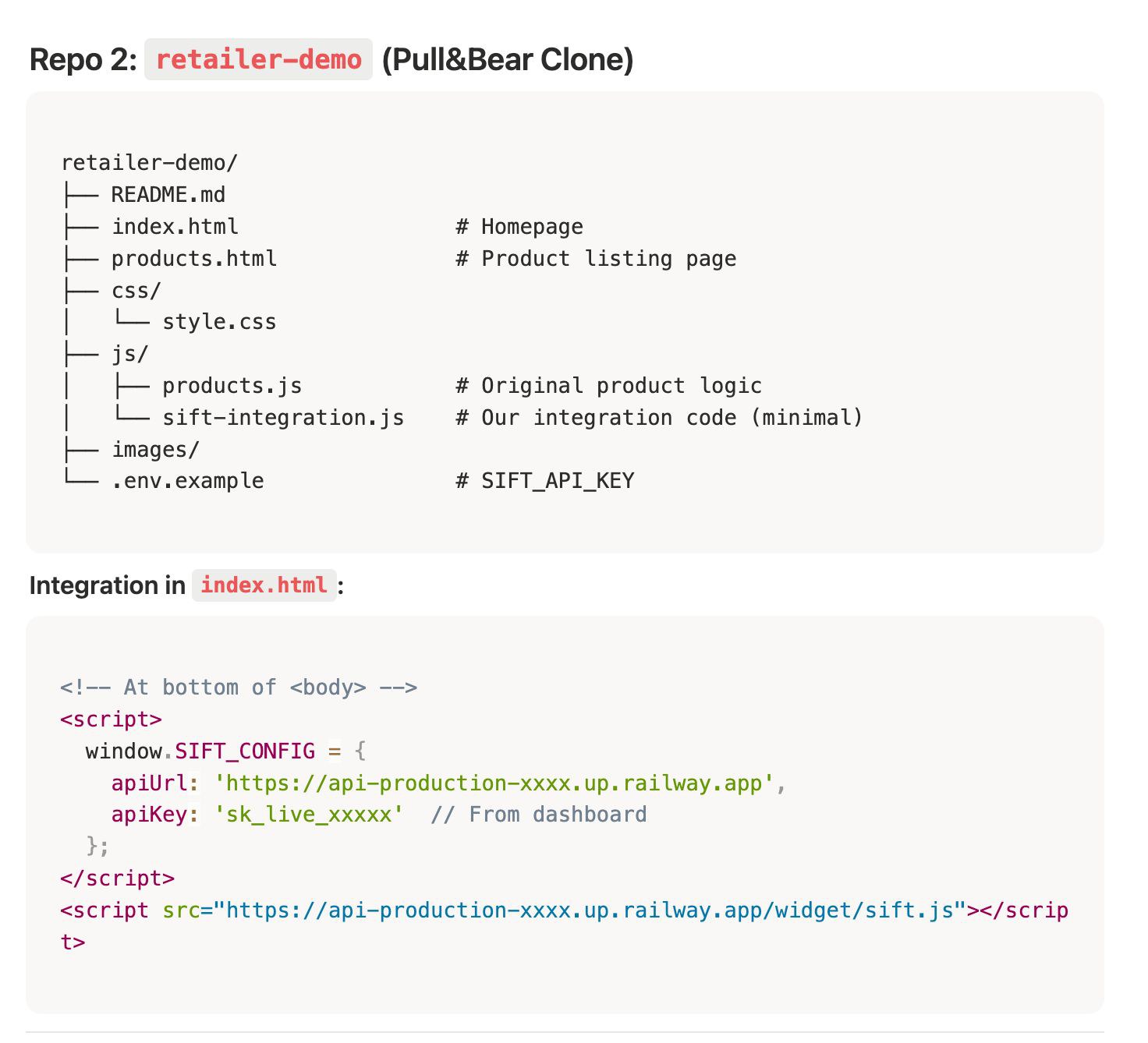
What runs where
| Layer | Sift Drive | Sift retail search |
|---|---|---|
| Interface | Next.js 14 | Next.js 15, embeddable widgets |
| API | FastAPI | FastAPI |
| Vector search | Qdrant | Qdrant Cloud, filtered per store |
| Records | PDF files | Supabase Postgres |
| Models | text-embedding-3-small, GPT-4o mini | text-embedding-3-small, GPT-4o |
Impact & Validation
Results, learnings, and outcomes
The first prototype won the PwC, Lovable, and BETA DASH 3.0 buildathon among 30 teams and more than 100 participants. The retail product reached the final five of 30 teams at the IE Tech Venture Bootcamp.
Presentation
The deck, slide by slide
Slide 1 of 10