Neuroskepticism in Pop Culture
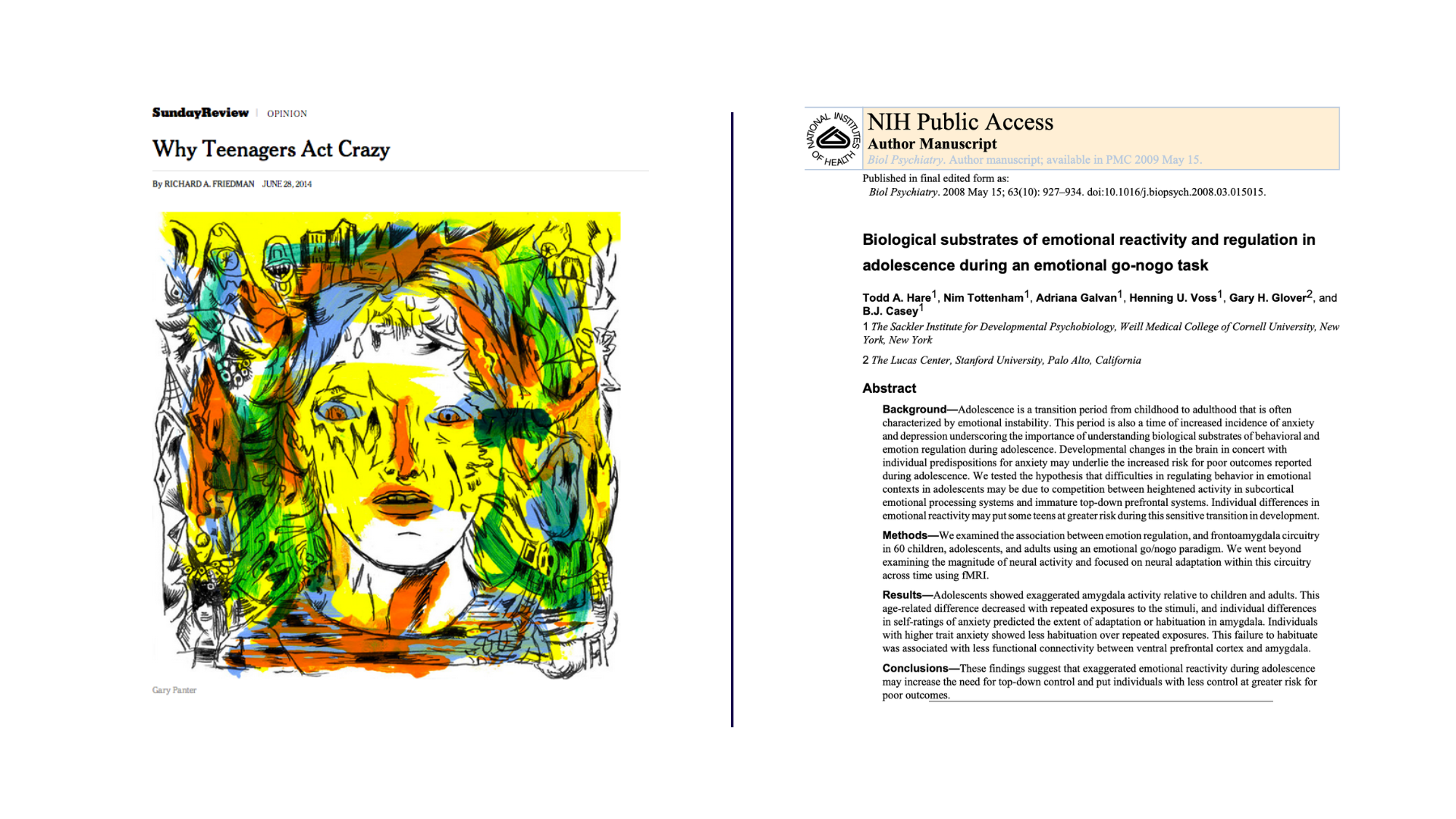
A side-by-side evaluation compares how pop culture outlets interpret neuroscience papers versus what the original scientific data actually shows. The visual framework places the popular narrative and primary research in direct contrast to reveal the subtle distortions that shape public understanding of the adolescent brain.
Why This Matters
A close reading compares how pop culture outlets interpret neuroscience papers versus what the original scientific data actually shows. When a New York Times article takes a peer-reviewed fMRI study and repackages it for millions of readers, what stays intact and what gets lost? The analytical framework places the popular narrative and primary research side by side to reveal the subtle distortions that shape public understanding of the adolescent brain.
The emphasis falls on visual contrast, credibility, and critical thinking. The authority comes from juxtaposition, not explanation.
The Popular Article
“Why Teenagers Act Crazy” by Richard Friedman, The New York Times, 2014
The Scientific Paper
Biological Substrates of Emotional Reactivity and Regulation in Adolescence During an Emotional Go-Nogo Task. Hare et al. (2008), Biological Psychiatry, 63(10), 927 to 934.
The Pop Culture Narrative
The New York Times, 2014
“Why Teenagers Act Crazy”
Richard Friedman’s article attempted to translate findings from Hare et al. (2008) into accessible public discourse. It correctly described adolescents’ heightened amygdala activation but simplified the methodological nuances central to the study.
Written for parents and young readers, normalizing adolescent anxiety while simplifying complex neurobiological mechanisms
“Adolescence is a period of heightened emotional reactivity”
Simplified from Hare et al. (2008)
“The teenage brain is especially at risk”
Framing from Friedman (2014)
“Brain scans explain why teens act out”
Popular inference from fMRI data
Science vs. Pop Culture
Pop Culture Claim
Scientific Finding
“Adolescence is a period of heightened emotional reactivity”
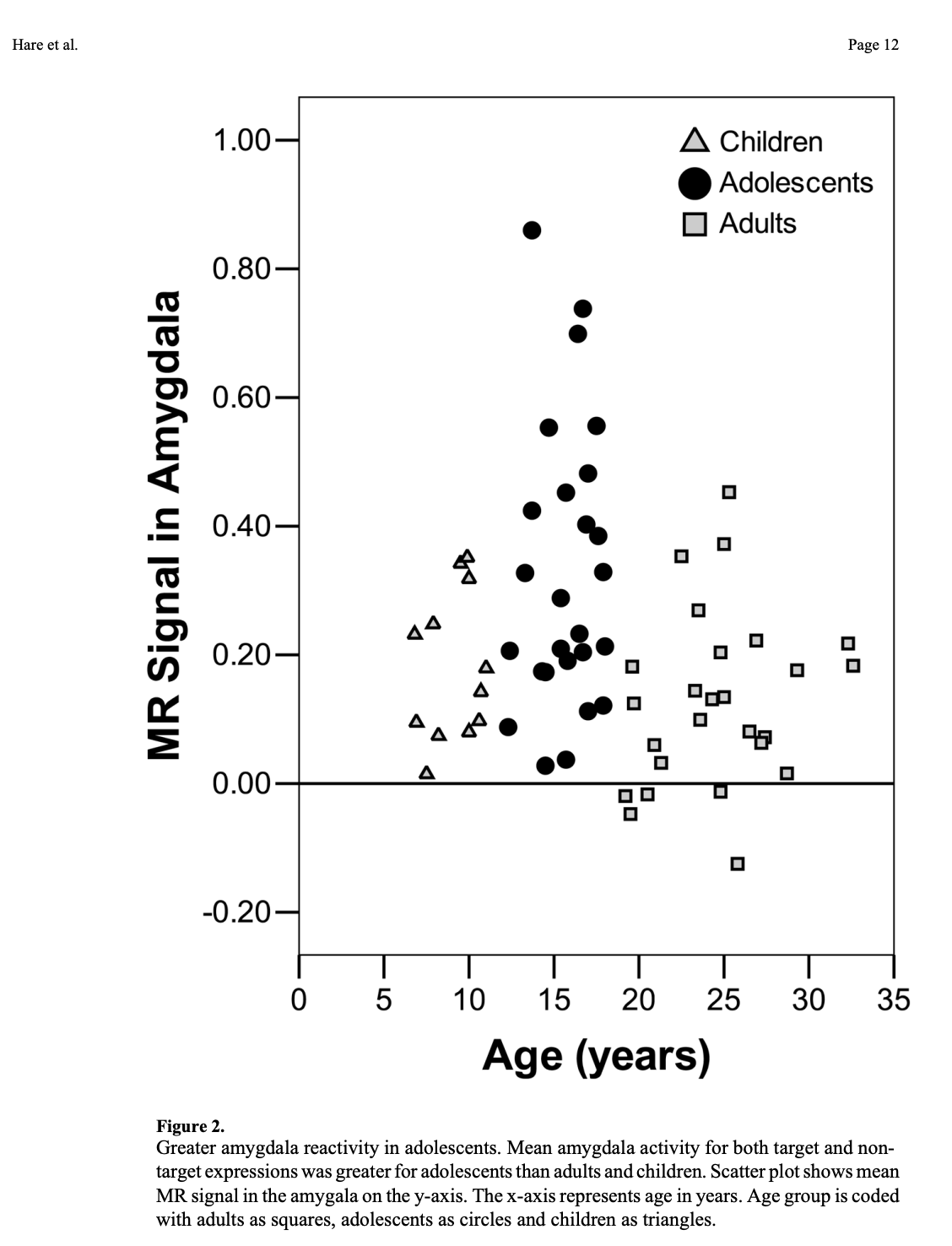
Amygdala reactivity was higher in adolescents on average, but individual variability was substantial and group distributions overlapped significantly
“The article described heightened amygdala activation as the key story”

The study also showed that subjects with higher anxiety exhibited less amygdala habituation and weaker vPFC connectivity, a key detail omitted from the popular account
“The article extended the results to advocate for new anxiety treatments”
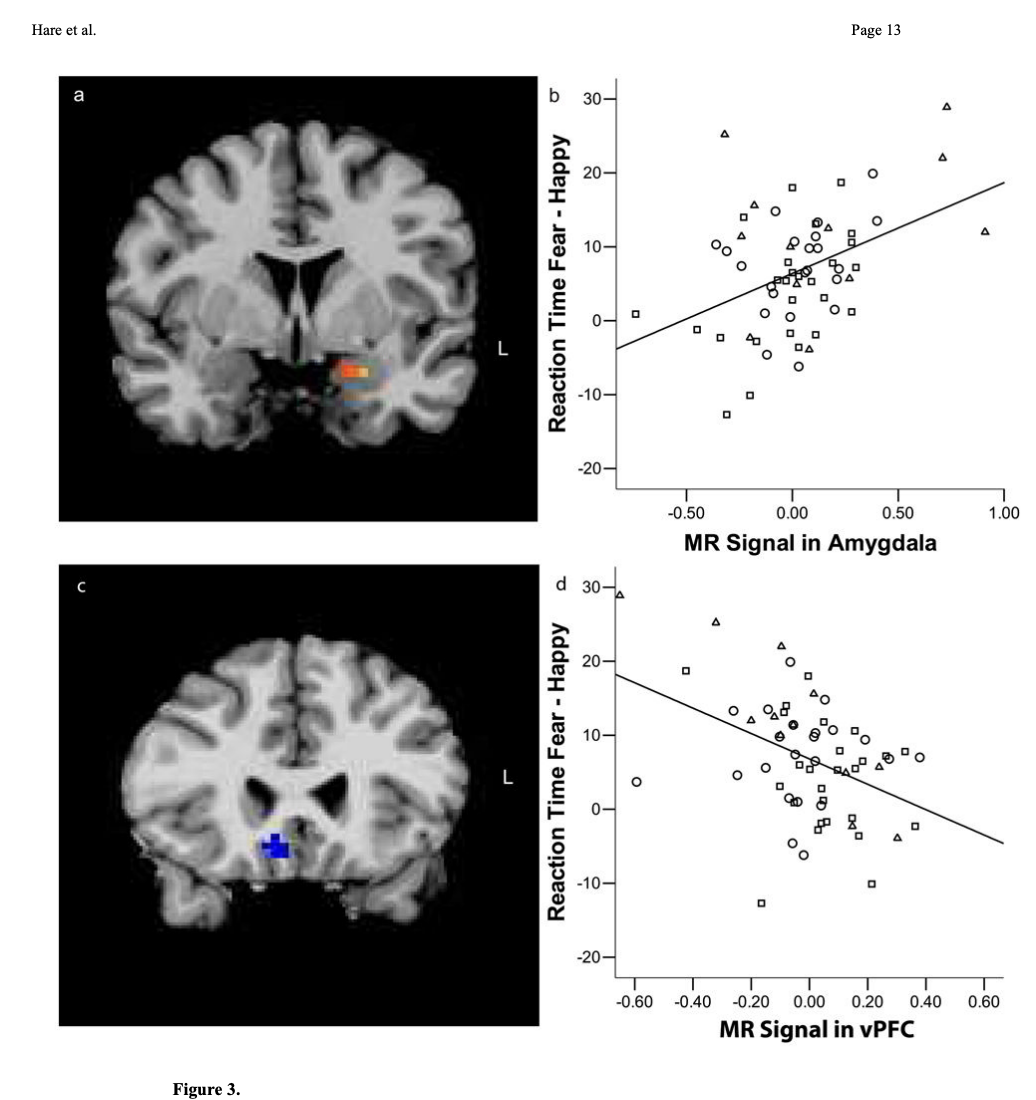
Although effective for public communication, this extrapolation risks overinterpreting correlational findings. The original study did not make treatment recommendations
“Teen brains lack the ability to regulate emotion”
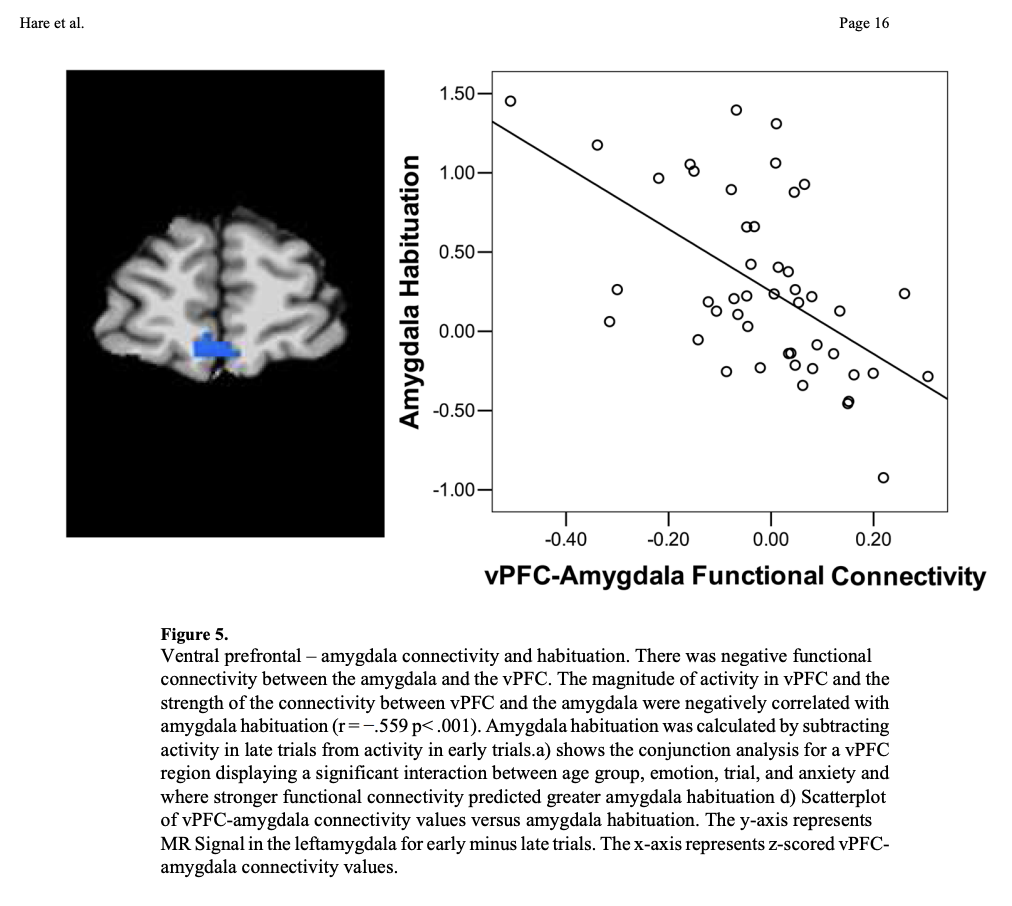
Adults were more efficient at regulating amygdala activity, requiring less vPFC activation. But regulatory mechanisms were present and active in adolescents
The Original Scientific Evidence
Hare et al. (2008) | Biological Psychiatry, 63(10), 927 to 934 | 60 subjects, ages 7 to 32
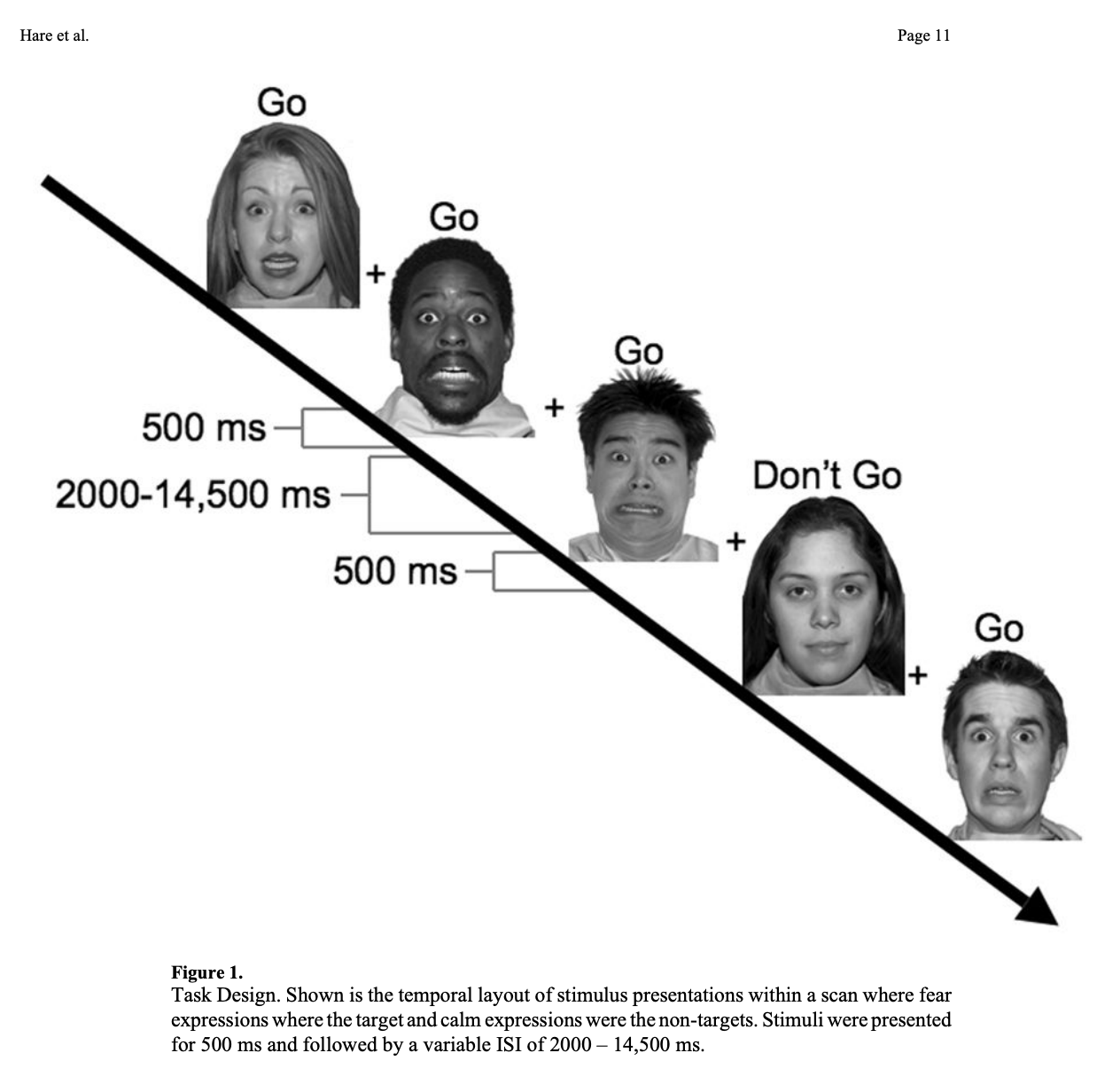
Emotional Go/No-Go task. Each participant completed six runs. Fear and calm expressions served as targets and nontargets. Stimuli presented for 500 ms with variable interstimulus intervals.
Amygdala reactivity by age. Mean amygdala activity was greater for adolescents than adults and children. Note the significant individual variability and overlap between all three groups.
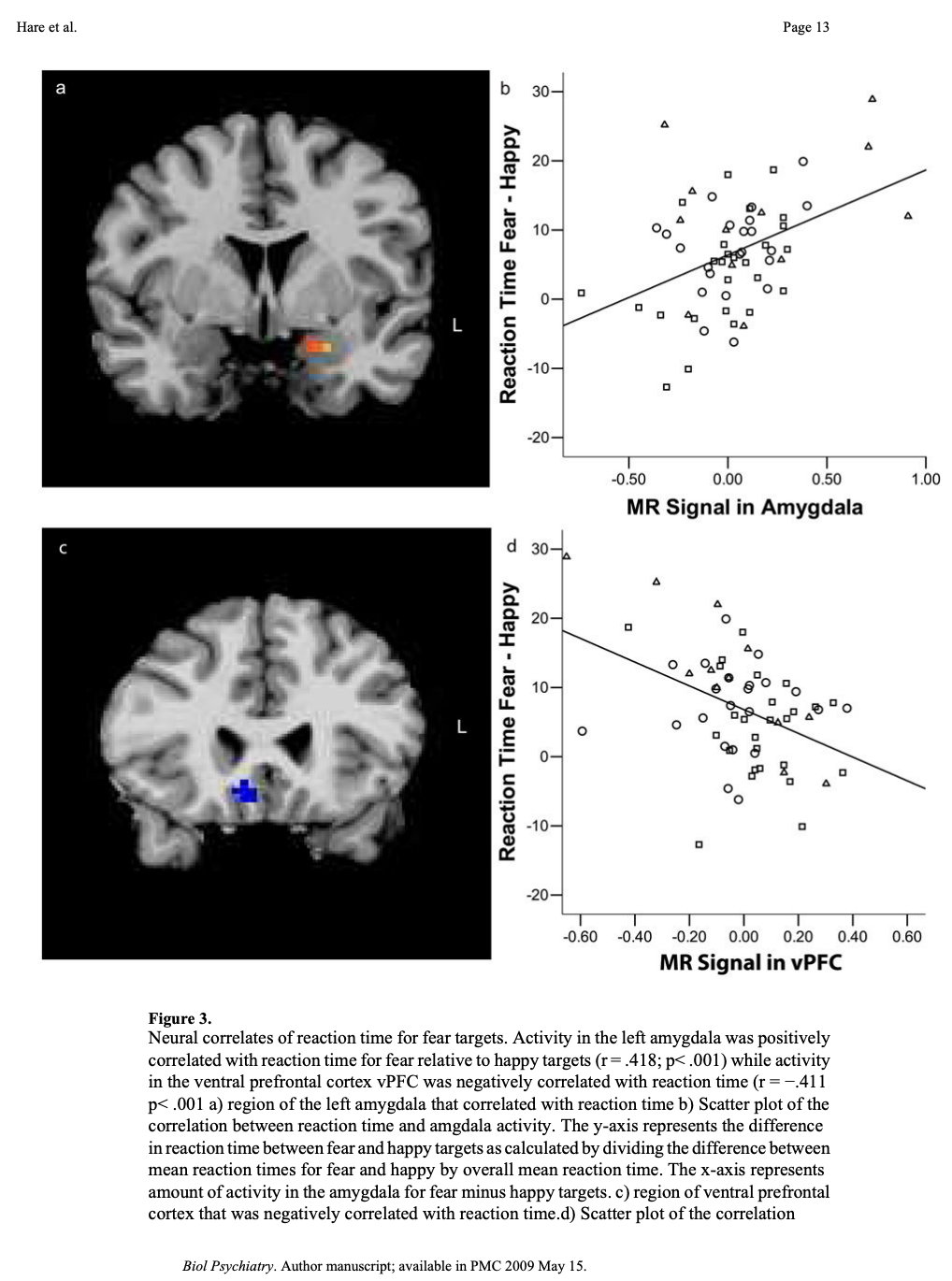
Neural correlates. Amygdala and vPFC activation correlated with reaction time across fear and happy targets. Brain scans show regional activation patterns by age group.
Habituation and anxiety. Trait anxiety negatively correlated with amygdala habituation (r = -.447, p < .001). Higher anxiety predicted less habituation across early and late trials.
vPFC connectivity. Stronger vPFC to amygdala coupling was associated with greater habituation (r = -.559, p < .001). Adults required less vPFC activation to achieve the same regulatory effect.
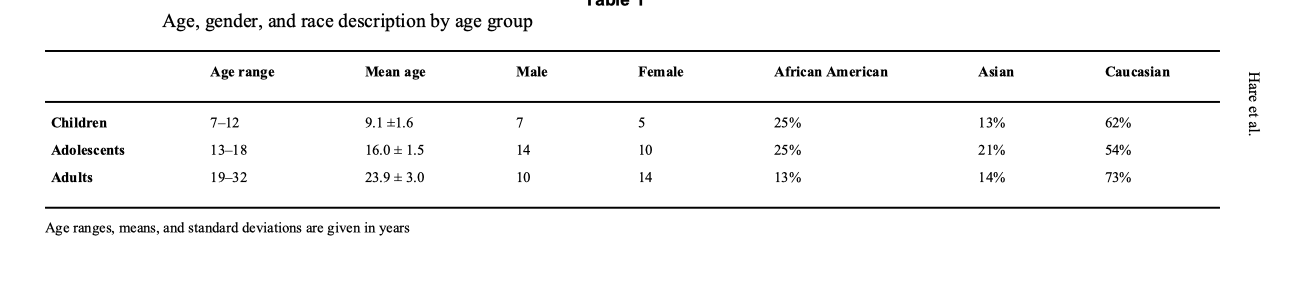
Sample description. Age ranges, gender distribution, and demographic breakdown across children, adolescents, and adults.
What Gets Lost in Translation
Correlation framed as causation
The NYT article extended correlational fMRI findings into causal claims about behavior and treatment. The original study identified associations, not mechanisms.
Failure to habituate was omitted
Hare et al. demonstrated that higher anxiety subjects showed less amygdala habituation and weaker vPFC connectivity. This key finding was simplified in the popular retelling.
Individual variability erased
The scatter plots show wide individual differences within each age group. The journalistic account collapsed this complexity into a single narrative about all teenagers.
Extrapolation beyond the data
The article advocated for further research on adolescent anxiety treatments, a reasonable suggestion but one that overinterprets what the original correlational design can support.
Conclusion and Takeaways
Analysis
The scientific paper and the popular article served complementary functions. The New York Times piece simplified without distorting the core message but could have benefited from more extensive referencing of the original methodology.
Hare et al. (2008) maintained methodological precision while remaining accessible to scientifically literate readers. The critical difference lies in what each chose to emphasize and what each chose to leave out.
Both sources have value
Pop science and empirical research coexist in an essential dialogue. Each shapes public understanding of neuroscience in different ways.
Boundaries matter
The line between accessible translation and oversimplification is narrow. Recognizing where that line falls is the core of neuroskepticism.
Critical reading is a skill
Evaluating how findings are framed requires understanding both the original data and the incentives of the communicator.
Key Takeaways
Awareness of these boundaries promotes neuroskepticism:
a critical appreciation for how neuroscience findings
are framed within cultural narratives
The analytical lens centers on critique and interpretation. The visuals establish credibility before text does.
The authority comes from juxtaposition, not explanation.